 blog
Are House Doctors Alternatives Good for Remodeling?
Last Updated: October 26, 2026
Quick Summary
House doctors alternatives split into two categories: handyman services for small repairs, maintenance, and minor installations, and remodeling contractors for larger renovations that involve permits, subcontractors, and drawn plans. Match the provider to your project scope, then verify licensing, insurance, and permits before signing.
- A handyman fixes what exists, while a remodeling contractor changes what exists.
- If the work involves a wall, pipe, wire, or permit, call a remodeling contractor.
- Low allowances make a bid look cheaper than it actually is.
- Confirm the license number with the state licensing board, not the logo.
- Call the insurer to confirm the policy is active and limits match.
Table of Contents
- What House Doctors Alternatives Actually Cover
- Handyman vs. Remodeling Contractor: Which Fits Your Project
- Alternative Provider Types by Project Scope
- How to Compare Remodeling Estimates Line by Line
- Questions to Ask a Remodeling Contractor Before You Sign
- Licensing, Insurance, and Work Guarantees to Verify
- Licensing: confirm the number, not the logo
- Permits: who pulls them matters
- Insurance: call the insurer, not just the agent
- Bonding: ask, because not everyone carries it
- Work guarantees: get the terms in writing
- Screening: ask before the technician arrives
- A verification checklist you can run in one sitting
- Timelines, Permits, and Disruption to Plan For
- Request Your Free Quote from Reliable Repair ATL LLC
- Frequently Asked Questions
What House Doctors Alternatives Actually Cover
Searching for house doctors alternatives for remodeling turns up franchise handyman brands, one-truck operators, and general contractors, and they do not offer the same thing. A handyman service handles small repairs, maintenance, and minor installations without managing a full construction project. A remodeling contractor plans and builds larger renovations, often with permits, subcontractors, and drawn plans. That distinction decides which provider you should call.
Below, we break down house doctors alternatives by project type and show how to read estimates line by line.
Handyman vs. Remodeling Contractor: Which Fits Your Project
The fastest way to choose is to ask what the job requires: a repair or a rebuild. A handyman fixes what exists. A remodeling contractor changes what exists.
If your project fits these, a handyman is usually the right call:
- Cabinet repair, hardware replacement, or a single fixture swap
- Drywall patching, trim work, and door adjustments
- Caulking, weatherproofing, and small exterior fixes
- Punch-list work after a larger renovation
If your project fits these, you need a remodeling contractor:
- Bathroom remodeling that moves plumbing or electrical
- Cabinet replacement across a full kitchen
- Layout changes, wall removal, or new construction
- Anything requiring a permit or an inspection
The line is not always clean. A cabinet replacement can be a straightforward swap or a full tear-out with new plumbing behind it. Before hiring anyone, walk through steps to take before hiring a handyman so you know which side of that line your project sits on.
Alternative Provider Types by Project Scope
Most homeowners compare names when they should compare categories. Provider type determines who is legally allowed to do the work, who carries the risk, and how the price is structured. Here is how the main categories differ, plus a scope-matching framework for your project.
| Provider Type | Best For | Typical Credentials | Typical Project Size | How You Pay |
|---|---|---|---|---|
| Franchise handyman brand | Small repairs, repeat maintenance, punch lists | Insured, background-checked technicians; franchise-level screening | Under a day per visit | Flat rate per job or hourly |
| Independent handyman | Minor repairs, odd jobs, single-fixture swaps | Varies widely; verify general liability insurance yourself | A few hours | Hourly, often with a minimum |
| Remodeling contractor | Bathroom and kitchen renovations, layout changes | State general contractor license where required, liability and workers' comp insurance, pulls permits | Weeks to months | Fixed-price bid with allowances and a draw schedule |
| Specialty trade contractor | Plumbing, electrical, roofing, HVAC | Trade license required in most states | Job-specific | Flat rate or time and materials |
| Full-service repair and remodeling firm | Repairs through mid-size renovations under one roof | Licensed, insured, background-checked; handles permits for larger scopes | Hours to weeks | Flat rate for repairs, bid for renovations |
| Design-build firm | Whole-room or whole-home remodels with drawings and selections | Licensed contractor plus in-house design; architect or designer on staff | Months | Design fee plus construction bid |
Match the provider to the job, not the other way around
Use this sequence before you call anyone:
- Does the work change the structure, plumbing, or electrical system? If yes, you need a licensed remodeling or specialty contractor, and a permit is likely. A handyman cannot legally take this on in most jurisdictions.
- Does the work require a permit or inspection? Pull the permit question forward. If the answer is yes, the provider must be licensed to pull it. Ask who pulls it before you compare price.
- Is the job a repair of something that already exists? Cabinet hardware, drywall patching, trim, caulking, and fixture swaps usually fall to a handyman. The same cabinet replacement becomes a remodeling job the moment the boxes come off the wall and plumbing or electrical moves.
- Is the job a single trade or multiple trades? A water heater swap is a plumbing job. A bathroom that moves the shower valve, adds a fan, and replaces tile is a remodeling job that coordinates three trades.
- How long will the work area be unusable? A same-day repair is a handyman category. Anything measured in weeks needs a contractor with a schedule, a dumpster plan, and a written scope.
Where the categories blur, and what to do about it
Franchise brands bring consistent processes and screening but often cap project size and decline permit work. Independent handymen can be excellent value on small jobs and unpredictable on anything structural.
A quick fit test
Before requesting a quote, write one sentence describing the job: what exists now, what will exist when it is done, and whether any wall, pipe, wire, or permit is involved. If it includes a wall, pipe, wire, or permit, call a remodeling contractor. If not, start with a handyman and let them tell you if the scope crosses the line, a reputable one will decline work outside their license rather than improvise.
How to Compare Remodeling Estimates Line by Line
An estimate is only useful if you can read it. Most budget surprises start with a line item nobody questioned.
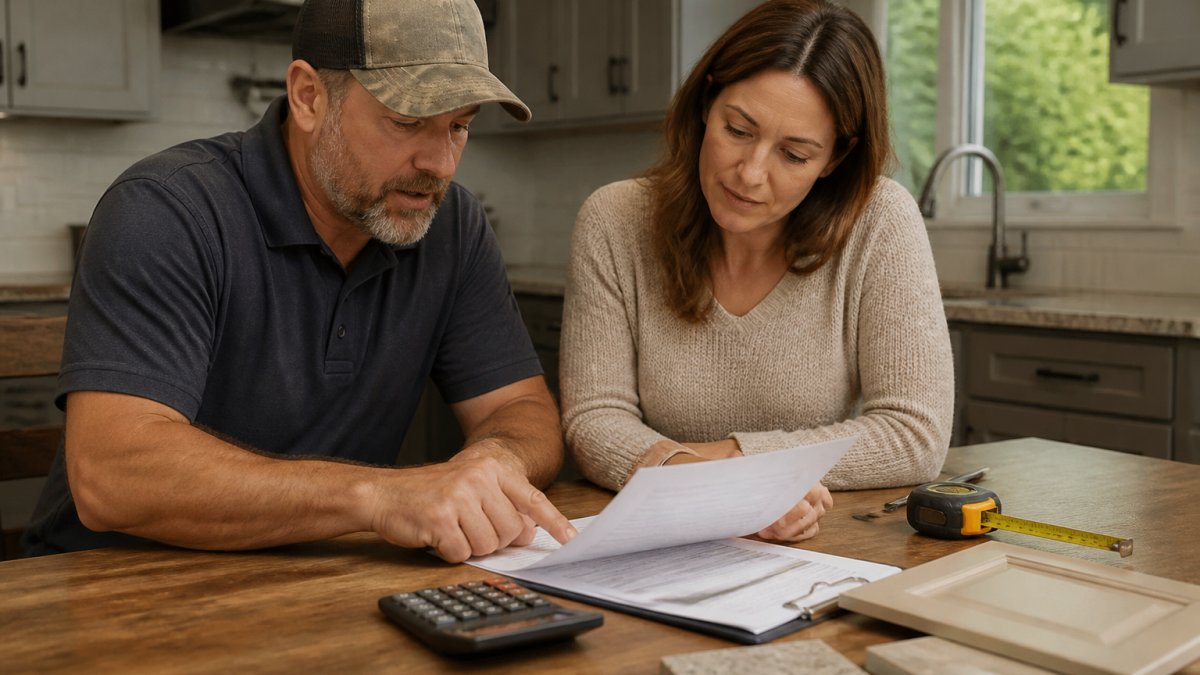
Work through each bid in this order:
- Scope description. Every line should name the material and the quantity. "Bathroom refresh" is not a line item.
- Labor vs. materials split. Ask for both. A bid that lumps them hides where overruns will land.
- Allowances. These are placeholder amounts for items not yet chosen. Low allowances make a bid look cheaper than it is.
- Exclusions. What is explicitly not included? Permits, dumpster fees, and drywall repair are common omissions.
- Contingency. Older homes hide problems. Ask how unexpected findings are priced before work starts.
- Payment schedule. Tie payments to completed milestones, never to a calendar date.
Compare bids side by side using the same categories. For a fuller walkthrough, see this guide to getting home repair estimates, and read up on avoiding remodeling budget overruns before you sign anything.
Questions to Ask a Remodeling Contractor Before You Sign
Ask these before signing, in person. The answers tell you more than any portfolio.
- Who will actually be on site, and are they employees or subcontractors?
- Are you licensed for this scope of work, and what is your license number?
- Can I see a certificate of insurance with my project address listed?
- What is your process when you find hidden damage behind a wall?
- How do you handle change orders, and who approves them?
- What does your work guarantee cover, and for how long?
- Can you provide references from projects similar to mine?
The hidden-damage question matters most in older homes. For a structured method, this guide on finding reliable contractors walks through the full sequence.
Licensing, Insurance, and Work Guarantees to Verify
Verification is a twenty-minute paperwork task. Do it before anyone starts, in this order, so you are not chasing documents after the crew is on site.
Licensing: confirm the number, not the logo
Ask for the license number and confirm it with the state licensing board directly rather than trusting a number on a truck or website.
Two questions to ask on the call:
- Is the license active, and what scope does it cover?
- Is the license held by the company or by an individual who may or may not be on your job?
If the person quoting your project is a salesperson rather than the license holder, confirm who will actually supervise the work.
Permits: who pulls them matters
Ask whether the work requires a permit and who is responsible for obtaining it. Confirm permit responsibility before work begins.
Insurance: call the insurer, not just the agent
Request a certificate of insurance showing general liability and workers' compensation coverage, then call the insurer listed to confirm the policy is active and the limits match. A certificate can be issued and later canceled; the phone call confirms it is live.
- General liability covers damage to your property or injury to others on your property.
- Workers' compensation covers the crew if someone is hurt on your job. If the contractor has no workers' comp and a worker is injured, the claim can come back to you as the homeowner.
Bonding: ask, because not everyone carries it
A surety bond protects you if the contractor fails to complete the work or violates the terms of the contract. Not every provider carries one, and many states do not require one for handyman-level work. Ask directly whether the company is bonded and for the bond amount.
Work guarantees: get the terms in writing
Get the guarantee in writing and confirm four things: what it covers, how long it lasts, whether it covers labor, materials, or both, and who honors it if the original contractor is out of business.
Screening: ask before the technician arrives
If technicians enter your home, ask whether the company runs background checks. Ask whether the same technician will return for follow-up visits, which matters on multi-visit repairs.
A verification checklist you can run in one sitting
- License number confirmed with the state board.
- Certificate of insurance received and confirmed with the insurer.
- Bond status and amount confirmed in writing.
- Permit responsibility named in the contract.
- Written guarantee with coverage period and labor/material split.
- Background-check policy confirmed.
- At least two references from projects similar in scope to yours, contacted by phone.
For a step-by-step process on checking references and credentials, use this guide to checking handyman contractor references.
Timelines, Permits, and Disruption to Plan For
Timelines are where expectations break.
Plan for disruption honestly:
- Expect the work area to be unusable for the duration.
- Ask when water and power will be shut off, and for how long.
- Confirm how debris is removed and who pays for the dumpster.
- Agree on daily start and end times before work begins.
Request Your Free Quote from Reliable Repair ATL LLC
The hardest part of hiring is not finding names, it is knowing which category of provider your project needs and verifying the one you pick can deliver it.
At Reliable Repair ATL LLC, we handle both sides of that line: handyman tasks and small repairs through bathroom upgrades and exterior renovations, with same-day service when something cannot wait.
Get started with Reliable Repair ATL LLC and request your free quote today.
Frequently Asked Questions
Can a handyman handle small remodeling projects?
A handyman may be a fit for some small repair projects. Ask providers whether they handle the specific work you need and whether any permits or other requirements apply.
How do I compare handyman and remodeling contractor quotes fairly?
Put both bids side by side and check what is included and excluded, the payment schedule, and any warranty terms. Ask each provider to explain the estimate and how changes to the work will be handled. Comparing house doctors alternatives this way can help you review the bids.
What should I look for in a remodeling service?
Ask providers about any applicable licensing requirements, insurance, the written scope of work, guarantees, references, and whether they conduct background checks. Review the information they provide before deciding which provider to hire.
What questions should I ask before hiring a home repair company?
Ask who will do the work and how unexpected findings will be handled. Ask for the proposed schedule and payment terms in writing, and clarify what recourse is available if you are unhappy with the finished work. Clear answers can help you understand the provider's proposed process.