 how-to
How to Get Home Repair Estimates: 2026 Step-by-Step Guide
Last Updated: October 23, 2026
Quick Summary
To get home repair estimates, turn your inspection report into a sorted repair plan with labeled photos, write a detailed scope of work, and request written bids from three to five verified contractors using the same template. Most estimates take three to seven business days for standard work.
- Sort inspection findings into must-fix, should-fix, and cosmetic items before requesting any bids.
- Send every contractor the same scope template and labeled photos so bids are comparable.
- Verify each contractor's license number, insurance certificate, and three recent references before a site visit.
- A complete estimate includes nine elements, including line-item pricing, permit responsibilities, payment schedule, and an expiration date.
- Set aside a contingency of 10% to 20% of your total repair budget for unexpected damage.
Table of Contents
- Step 1: Turn Your Inspection Report Into a Repair Plan
- Step 2: Define the Scope of Work Before You Call Anyone
- Step 3: Request Estimates From Qualified Contractors
- What to Include in a Home Repair Estimate
- How Long Does It Take to Get a Repair Estimate?
- How to Compare Contractor Estimates Line by Line
- Budgeting for Contingency and Unexpected Damage
- Conclusion
- Frequently Asked Questions
Step 1: Turn Your Inspection Report Into a Repair Plan
A home inspection report is a dense, technical to-do list. Most homeowners read it once, feel overwhelmed, and file it away, the wrong move if you want home repair estimates that hold up.
Homeowners who arrive with a clear repair plan often get faster, more accurate numbers; the unprepared may get vague guesses that balloon later.
Sort every finding into three buckets, then document the damage visually, that groundwork turns inspection notes into a repair plan a contractor can price.
Sort Findings Into Must-Fix, Should-Fix, and Cosmetic
A must-fix item is a defect that affects safety, structure, or the home's ability to pass a future inspection. These get priced first, with no negotiation.
- Must-fix: roof leaks, foundation cracks, electrical hazards, active water damage, failing HVAC
- Should-fix: worn flooring, outdated fixtures, minor plumbing drips, drafty windows
- Cosmetic: paint, scuffs, dated finishes, landscaping
This sorting controls your budget conversation: must-fix items are non-negotiable, while cosmetic work is where you trim if numbers come in high.
A common mistake is asking for "a quote on the whole list." Contractors price vague lists with vague numbers, give them categories instead.
Document Interior and Exterior Damage With Photos
Photos help contractors price remotely and protect you if scope disputes arise later.
Walk the property room by room and shoot wide, then close: the full wall or roof section first, then the specific defect, with something for scale like a tape measure or a hand.
- Interior: water stains, cracked drywall, damaged flooring, signs of pests
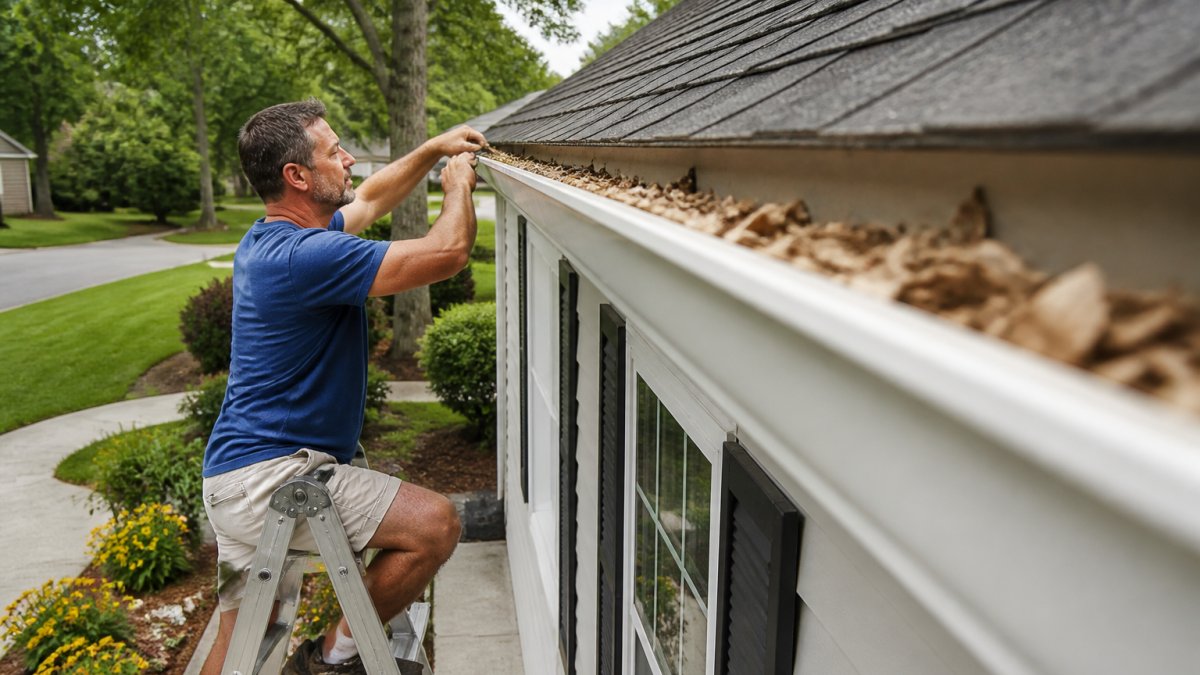
- Exterior: roof shingles, gutters, siding, foundation grading, driveway cracks
- Mechanicals: water heater, HVAC unit, electrical panel, with model plates visible
Label each photo with its location and matching inspection item, that habit speeds up every estimate you request.
Step 2: Define the Scope of Work Before You Call Anyone
A scope of work is a written description of exactly what needs to happen, in what quantity, at what quality level. It's the single biggest lever you control over how accurate your home repair estimates turn out.
Vague scope, vague price. Specific scope, comparable bids.
Before you dial a single contractor, write down:
- The specific defect and its location
- The repair method you expect (replace vs. repair, patch vs. full section)
- Materials or quality tier you're willing to pay for
Use a Home Repair Estimate Template to Organize Details
A home repair estimate template keeps you consistent across every contractor you contact, which is what makes bids comparable later.
Here's a simple template you can copy:
| Field | What to Enter |
|---|---|
| Property address | Full address and unit number |
| Inspection item | Quote the report line verbatim |
| Location | Room, exterior elevation, or system |
| Defect description | What's wrong, in plain terms |
| Proposed repair | Replace, patch, rebuild, or install |
| Quantity | Square footage, linear feet, or unit count |
| Material tier | Budget, mid-grade, or premium |
| Access and timing | Availability, occupancy, deadlines |
| Photos | Attach labeled images |
| Budget range | Your target, not your ceiling |
Fill this out once per repair item and send the same template to every contractor. You'll get comparable bids instead of three documents describing three different jobs.
Step 3: Request Estimates From Qualified Contractors
Contact three to five qualified contractors per major repair item, and expect one to two weeks for non-emergency work. The goal isn't the most bids, it's the most comparable bids from contractors who can actually do the work.
Run the Request as a Repeatable Process
Treat the request like a small project with defined steps, so every contractor gets the same information.
- Build a shortlist of five to seven names. Pull from state licensing board lookups, trade associations, and referrals from people who used the contractor for similar work in the past year. Skip anyone with no verifiable license.
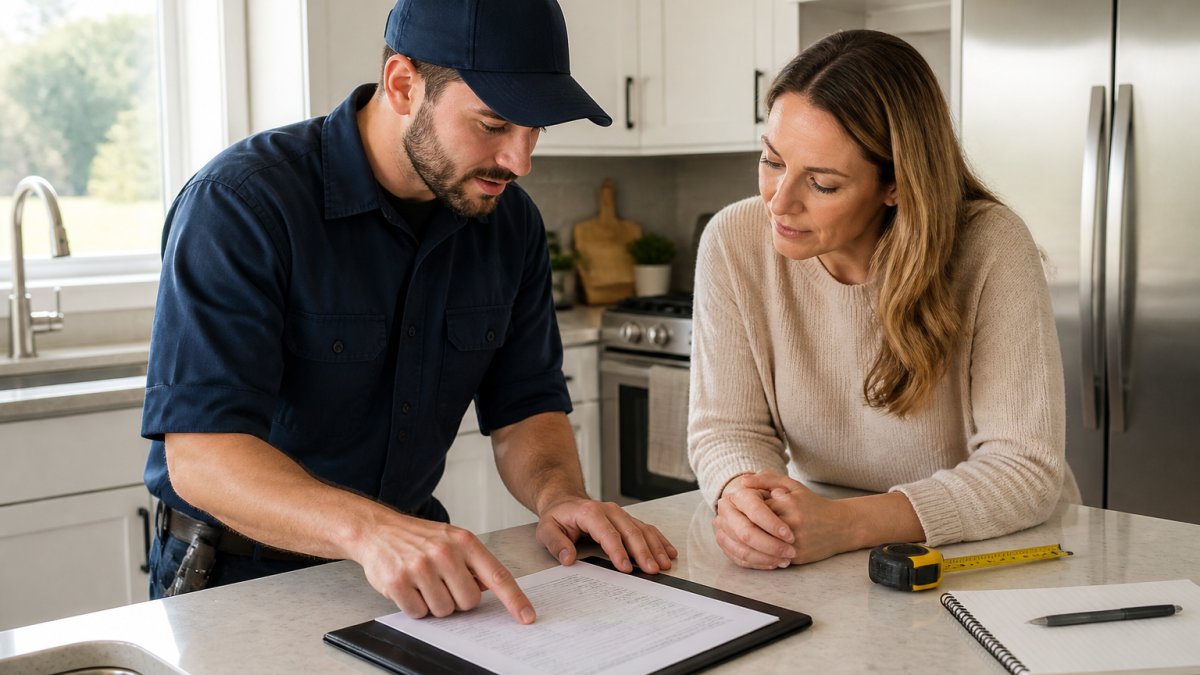
- Send a written request by email. Attach your scope template and labeled photos, and state the address, repair items, target start window, and a bid deadline (for example, ten business days). This creates a paper trail and forces a written response.
- Ask three screening questions before booking a visit. Request the license number, certificate of insurance, and proof of at least two similar jobs in the past year. Contractors who can't answer within a day usually aren't organized enough to price accurately.
- Schedule site visits in a tight window. Book visits within the same week when possible. Contractors who see the property around the same time price against similar conditions, which makes their bids more comparable.
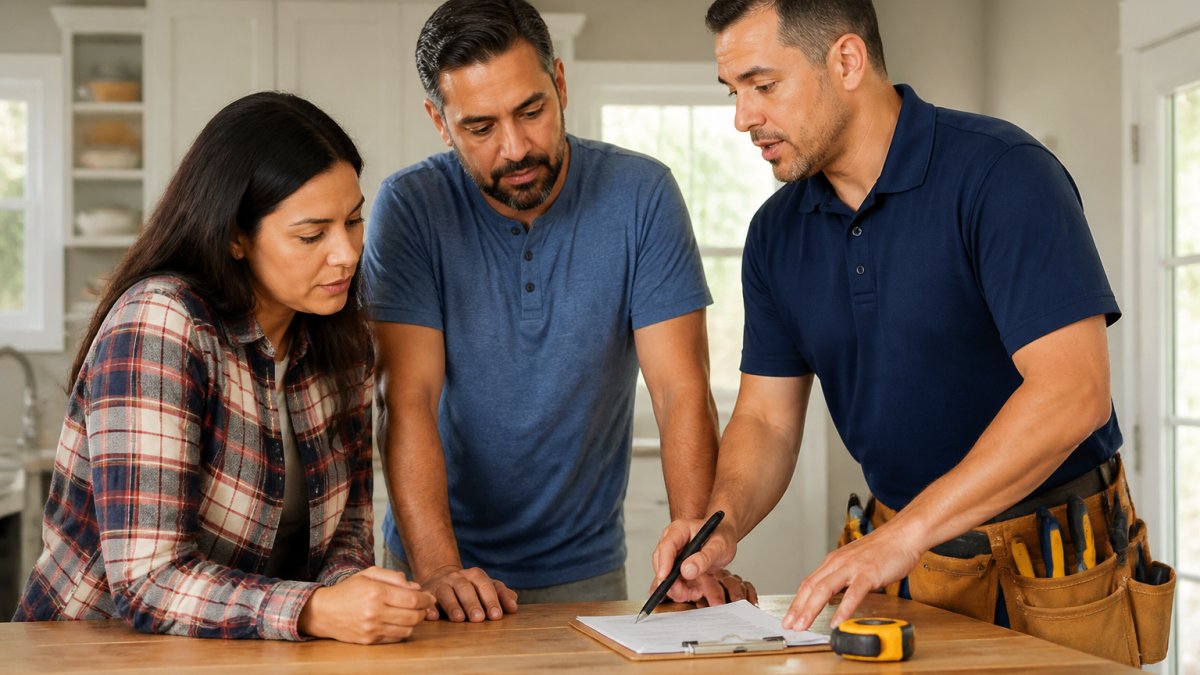
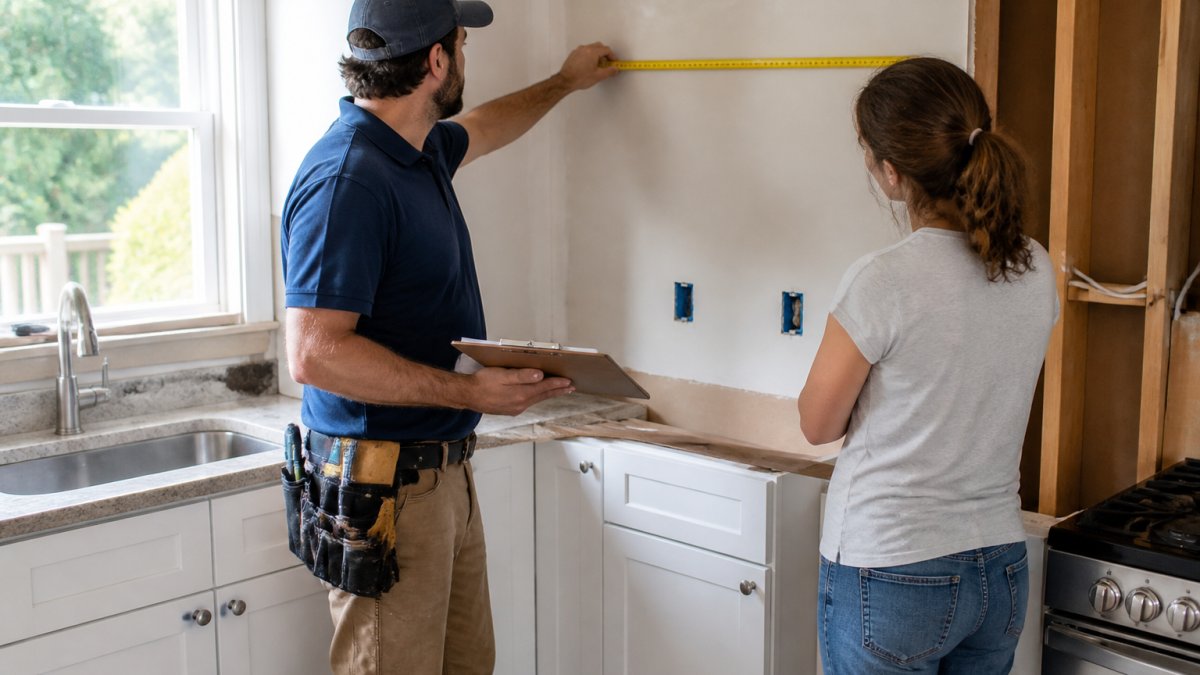
- Walk the property with each contractor. Point out each defect from your template and ask how they'd approach it. Note whether they mention permits, access constraints, or hidden-damage risks you hadn't considered, their questions reveal their experience.
- Request the bid in writing against your template. Ask each contractor to use the same line items and quantities, or to map their own format back to your template.
- Log every response. Record the date received, the total, the scope match, and any exclusions. This log becomes your comparison worksheet.
What to Ask on the Phone Before a Site Visit
A five-minute call screens out most mismatches before anyone drives out. Ask:
- Are you licensed for this type of work, and what is your license number? Verify it against the state or local licensing board database before the visit.
- Do you carry general liability and workers' compensation insurance? Ask for a certificate of insurance naming you as the certificate holder.
- Have you completed at least two similar jobs in the past year? Ask for references you can call.
Verify Licensing, Insurance, and References
Verification means confirming a contractor holds the required state or local license, carries general liability and workers' compensation insurance, and can produce recent references for similar work.
Ask for all three before any site visit:
- License number, checked against your state's licensing board database. Note the license type and expiration date, not just the number.
- Certificate of insurance, with the contractor listed as the insured and the coverage limits visible. Call the insurer if the certificate looks altered.
- Three references from jobs similar in size and type, from the past year. Ask each reference about timeline, budget accuracy, and how change orders were handled.
Call the references and ask open questions: What surprised you during the job? Did the final bill match the estimate? How were mid-job problems handled? The answers tell you more than any review page.
What to Include in a Home Repair Estimate
A complete home repair estimate should contain nine elements: contractor identification and license number, a detailed scope of work, line-item pricing for labor and materials, permit responsibilities, a project timeline, payment schedule, warranty terms, change-order process, and an expiration date. If any are missing, ask for them in writing before you sign, a one-line total on a napkin is a guess, not an estimate.
What Each Element Should Actually Contain
Here's what a complete version of each item looks like, and what a weak one looks like.
- Contractor identification and license number. The legal business name, physical address, phone number, and license number with expiration date. A weak version lists a first name and a cell number.
- Scope of work. A line-by-line description matching your template: what is being replaced or repaired, the quantity, and the quality tier. A weak version says "repair roof" with no square footage or material spec.
- Labor and material costs. Broken out separately, with material brand and grade named. A weak version gives one lump sum, which makes it impossible to see where the money goes or compare bids.
How to Read the Numbers
An estimate is a set of assumptions, and that's where bids diverge. When you read a bid, check:
- Labor hours against the scope. Wildly low hours for a large job usually mean the contractor plans to rush, cut corners, or add hours later as a change order.
- Material quantities against your measurements. A roof bid that lists fewer squares than your template is either a mistake or a lowball.
- Exclusions. The bid should state what the contractor is not doing: painting, drywall repair after a plumbing fix, debris hauling, or permit fees. A bid with no exclusions is either incomplete or hiding scope gaps.
Red Flags in a Written Estimate
- A total price with no line items
- No license number or insurance information
- A payment schedule that front-loads most of the cost before work begins
Written estimates protect both sides. They give you a document to compare against and the contractor a clear scope to price against. Verbal estimates are worthless once the job starts.
How Long Does It Take to Get a Repair Estimate?
Most home repair estimates take three to seven business days for standard work, and one to three weeks for larger renovation or structural projects. Emergency repairs get quoted same day or next day.
Several factors stretch that timeline:
- Project complexity: a water heater swap is fast; a bathroom rebuild is slow
- Site visit requirement: some contractors won't price without seeing the property
- Permit research: jobs needing permits take longer to scope
If a contractor promises a same-day estimate on a complex job, ask how they're pricing it. Fast quotes on big jobs usually mean assumptions baked in that will surface as change orders later.
Reliable Repair ATL LLC offers same-day service options for urgent repairs.
How to Compare Contractor Estimates Line by Line
Comparing home repair estimates means matching each bid against your scope template, line by line, not against the bottom-line total. The lowest total is often the least complete bid.
Put them side by side and check for these gaps:
| What to Compare | Why It Matters |
|---|---|
| Scope match | A missing line item means a missing cost |
| Labor hours | Wildly low hours signal a rushed or incomplete bid |
| Material specs | Brand, grade, and quantity should be named |
| Permits | Who pulls them, who pays |
| Exclusions | What the contractor is NOT doing |
| Payment schedule | Front-loaded payments are a red flag |
| Timeline | Realistic start and finish dates |
| Warranty | Length and what's covered |
An estimate that's 20% lower than the others usually excludes something. Find out what before you celebrate.
Budgeting for Contingency and Unexpected Damage
Set aside a contingency of 10% to 20% of your total repair budget for surprises.
Here's how to build a realistic project budget:
- Must-fix total from your three best estimates
- Should-fix total if budget allows
- Contingency at 10% minimum, 20% for older homes
Ask every contractor how they handle discoveries mid-job. The good ones write a change order, get your signature, and show you the new cost before proceeding.
If unexpected damage turns up, don't panic-sign a change order on the spot. Ask for photos, a written description, and a revised line-item cost.
Conclusion
Getting accurate home repair estimates comes down to preparation: a sorted repair plan, labeled photos, a written scope, and bids from verified contractors you can compare line by line.
Reliable Repair ATL LLC offers same-day service for urgent repairs, monthly maintenance plans, and comprehensive repair and remodeling work from handyman tasks to exterior renovations and junk removal.
Get started with Reliable Repair ATL LLC and request your free quote today.
Frequently Asked Questions
How can I get an accurate estimate for home repairs?
Accuracy starts with a clear scope of work. Write down every item you want fixed, photograph the damage, and note square footage and property details. Share that package with at least three contractors so each one prices the same list. Ask for itemized home repair estimates that separate labor costs from material costs. Walk the property with each contractor so they can see hidden issues firsthand. The more detail you provide upfront, the fewer surprises appear in the final cost breakdown.
How many estimates should I get for a home repair?
Three written estimates is the standard. One bid gives you no reference point, and two can leave you guessing which is fair. Three lets you spot outliers, compare labor costs and material costs, and see how each contractor scopes the same job. For larger renovation or rehab costs, consider four. Keep every estimate in a folder with the date, contractor name, and license number so you can compare contractor estimates side by side later.
Are home repair estimates free?
Most contractors provide a no-obligation estimate at no charge, especially for routine repairs and light updates. Some specialists charge a fee for detailed assessments, such as structural or water damage evaluations, and may credit that fee toward the project if you hire them. Always ask upfront whether the visit costs anything. A free estimate should still be written and itemized, not a number scribbled on a business card.
What is the difference between a repair estimate and a quote?
An estimate is an educated projection of repair costs based on what the contractor can see and the scope of work you agreed on. A quote is a fixed price the contractor commits to for that defined scope. Estimates can shift if hidden damage appears once work begins; quotes generally cannot. For budgeting, start with estimates, then ask your chosen contractor to convert the agreed scope into a written quote before signing anything.