 how-to
Steps to Take Before Hiring a Handyman
Table of Contents
- Assess Your Project and Define the Scope of Work
- Verify Licenses, Insurance, and Credentials
- Check Handyman References and Reviews
- Questions to Ask a Handyman Before Hiring
- Request and Compare Handyman Estimates
- Secure a Written Agreement and Understand Payment Terms
- Red Flags and How to Avoid Hiring Scams
- Frequently Asked Questions
Last Updated: October 21, 2026
Assess Your Project and Define the Scope of Work
Before hiring a handyman, write down exactly what's broken, what needs fixing, and what the end result should look like. Vague descriptions lead to vague quotes.
Take photos of the problem area and note measurements or specific issues, where the faucet leaks, how much drywall needs patching. This clarity helps handymen understand your scope without guessing.
Consider whether your project requires specialized skills: a simple cabinet repair is different from a full bathroom renovation, and some jobs need licensed contractors.
Document your timeline too, emergency repairs cost more than planned maintenance, and being upfront helps a handyman schedule and price accurately.
Verify Licenses, Insurance, and Credentials
This is the step most homeowners rush, and it determines whether you have recourse if something goes wrong. Licensing and permit rules are set at the state and local level, so there is no single national answer (Licensing Requirements Tool). Verify three things independently: the license (if required), the insurance, and whether the work needs a permit.
Step 1: Find out what your state and locality require
Start with your state's licensing board or department of consumer affairs, most maintain a public license lookup showing status, expiration date, and disciplinary actions. In states with minimal handyman licensing, check your city or county business license office as well.
A useful rule of thumb: the more the job touches structural, electrical, plumbing, or gas systems, the more likely a licensed trade professional and a permit are required. A handyman can typically handle patching, painting, assembly, and minor carpentry; wiring, water lines, load-bearing elements, or gas appliances usually need a licensed trade contractor. Confirm the line for your job with your local building department before you book anyone.
Step 2: Ask for the documents, then verify them yourself
Ask the handyman for:
- License number and expiration date (if applicable in your state or locality). Verify it through the state or local lookup rather than trusting a photo of a card.
- Certificate of insurance showing general liability coverage, with your name and address listed as the project location if possible. The certificate should name the insurer, policy number, coverage limits, and effective dates.
- Workers' compensation coverage if the handyman has employees. If they are a sole proprietor with no employees, ask how they handle injury risk and whether they carry their own coverage.
Call the insurer's agent listed on the certificate to confirm the policy is active and the limits match, certificates can be altered or expired.
Step 3: Determine whether your job needs a permit
Permit requirements are set by your local building department. Before work starts, ask the handyman directly: "Will this job require a permit, and who is pulling it?" If a permit is required, it is usually the contractor's responsibility to pull it. Unpermitted work can complicate resale, insurance claims, and future inspections.
Step 4: Confirm bonding and business registration
"Bonded" means the business has purchased a surety bond, giving you a claims process if it fails to perform. Ask for the bond number and bonding company and confirm it is current. Also confirm the business is registered with your state, the name on the estimate should match the name on the license, insurance, and bond.
What to do if a credential is missing
If the handyman cannot produce a required license or current insurance, do not proceed. The upfront savings are small compared with an injury on your property, water damage from unpermitted plumbing, or a failed inspection at resale.
Check Handyman References and Reviews
References show you how a handyman treats past customers. Ask for at least three references from recent projects and call them. Ask: Did the handyman show up on time? Was the work quality good? Would they hire this person again?
Check Google, Yelp, and local business directories, and look for patterns. One negative review might be an outlier; multiple complaints about the same issue (not showing up, poor communication, sloppy work) signal a real problem.
Pay attention to how the handyman responds to negative reviews. Professional responses show they care about customer satisfaction. Defensive or dismissive replies are red flags.
Ask about their experience with your specific type of project. If you need bathroom tile installation, ask how many tile jobs they've completed and to see photos of past work.
Questions to Ask a Handyman Before Hiring
When hiring a handyman, ask about their experience and availability first: How long have they been doing this work? Can they commit to a specific start date?
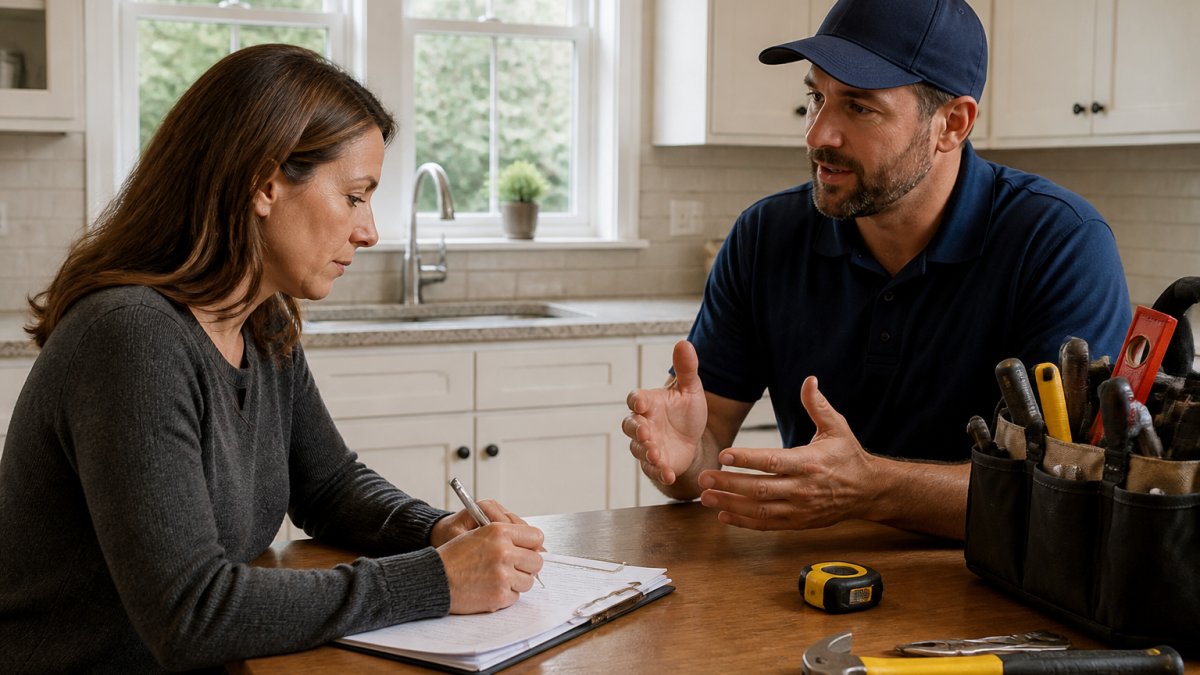
Ask how they handle unexpected problems, a cracked pipe behind drywall, structural damage hidden in a wall.
Get clarity on payment methods and timing: Do they accept cash, check, or digital payment? When do they expect payment, upfront, during the job, or after completion?
Ask about warranties or guarantees. If something fails within 30 days, will they come back and fix it for free? What's covered and what's not?
Ask about their communication style: Will they text updates or call if they're running late? Good communication prevents surprises.
Request and Compare Handyman Estimates
Request written estimates from at least two or three handymen, don't rely on phone quotes or rough numbers.
A good estimate includes:
- Detailed description of the work to be done
- Materials needed and estimated costs
- Labor costs and estimated hours
- Timeline and start/completion dates
- Payment terms and schedule
- Warranty or guarantee information
If one estimate is much lower than others, ask why: cheaper materials, corners cut on labor, or simply lower overhead?
Watch out for vague estimates. "Fix bathroom" isn't specific enough; "replace broken tile in shower wall, 15 square feet, including removal and new tile installation" is. Vague estimates hide surprises.
Ask each handyman the same questions about their approach to spot differences in quality and method, not just price.
Secure a Written Agreement and Understand Payment Terms
A written agreement determines what happens when the job goes sideways. Use this checklist to hand to a handyman or compare against the one they provide.
The written-work-agreement checklist
Scope of work. List each task in plain language with quantities where possible (for example, "patch 3 drywall holes, approx. 12 sq ft total; prime and paint to match").
Materials. State who supplies materials, what grade or brand, and who pays. If the handyman supplies materials, ask for an itemized list so you can see what you are paying for.
Schedule. Include a start date, an estimated completion date, and daily working hours. Note any access constraints (for example, "work must stop by 5 p.m. on weekdays").
Change orders. This is the clause most homeowners forget.
Cleanup and disposal. Specify who removes debris and old materials, whether a dumpster is included, and what condition the work area will be left in.
Warranty. State what is covered, for how long, and whether it covers labor only or labor and materials.
Payment milestones. Tie payments to completed milestones rather than to the calendar.
Payment protections to build in
- Keep the deposit reasonable. A deposit large enough to cover materials is normal; a demand for the full amount upfront is not. If a handyman insists on full payment before starting, that is a reason to walk away.
- Pay by traceable method. Check or card gives you a record. Cash does not. If a handyman offers a discount for cash, weigh that against the loss of documentation.
- Get a receipt for every payment, showing date, amount, method, and what the payment covers. Keep them with the agreement.
- Ask about lien waivers. If the handyman uses subcontractors or suppliers, ask for a lien waiver or conditional waiver at each payment so you have documentation that those parties have been paid. This protects you from a mechanics lien on your property for work you already paid for.
- Hold back final payment until you inspect. Walk the job before the final payment. Note any punch-list items in writing and agree on a date to complete them.
If the work is incomplete or disputed
Put your concerns in writing, email or text is fine, referencing the specific scope item and the agreement, and give a reasonable deadline to cure. If the handyman does not respond, your documentation supports a claim, a chargeback if you paid by card, or a complaint to your state or local consumer protection office.
Red Flags and How to Avoid Hiring Scams
If a handyman pressures you to pay cash only, that's a red flag, cash payments offer no documentation or protection.
Avoid handymen who won't provide written estimates or references; reluctance suggests they have something to hide.
Be cautious if a handyman quotes a price without seeing the job in person, they might underestimate the work and demand more money mid-project.
Don't hire someone who shows up at your door unsolicited offering services, door-to-door handymen sometimes overcharge vulnerable homeowners for unnecessary work.
Watch for handymen who demand full payment before starting work. This leaves you unprotected if they disappear or do poor work. Reputable professionals work with reasonable deposit and balance arrangements.
Verify any warranty claims independently. If a handyman claims their work is "guaranteed for life," get that in writing. Ask what's actually covered. Vague guarantees aren't worth the paper they're printed on.
Finding a reliable handyman takes time, but the effort protects your home and your investment. At Reliable Repair ATL LLC, we understand how important it is to work with professionals you can trust.
Frequently Asked Questions
What questions should I ask a handyman before hiring?
Ask about their experience with your specific project type, licensing and insurance status, availability and timeline, warranty on work, payment methods accepted, and whether they handle permits. Request references from recent clients and clarify what the written estimate includes. Ask how they handle unexpected problems and whether they charge extra for materials or labor overages. Understanding their communication style and responsiveness upfront prevents misunderstandings later.
Should I get a written estimate from a handyman?
Yes, always request a written estimate before work begins. A proper estimate should detail the scope of work, materials needed, labor costs, timeline, and payment schedule. It protects both you and the handyman by setting clear expectations. Compare estimates from multiple handymen to ensure pricing is fair and competitive. A written estimate also serves as the foundation for your work agreement and helps prevent surprise charges.
How can I verify a handyman's references and experience?
Request at least three recent references from clients who had similar projects completed. Contact them directly to ask about work quality, timeliness, professionalism, and whether the handyman stayed within budget. Check online reviews on Google, Yelp, or the Better Business Bureau for patterns in customer feedback. Ask the handyman to show photos of completed work and verify their experience with your specific job type, whether that's bathroom renovation, tile installation, or general repairs.
Should a handyman be licensed and insured for my project?
Yes. Licensing and insurance requirements vary by project type and location. For major work like electrical or plumbing, licensing is often required by law. Insurance protects you if the handyman is injured on your property or if work causes damage. Always request proof of current insurance and verify their license status with your state or local licensing board. This protects your home and gives you recourse if something goes wrong.