 how-to
7 Home Repair Safety Rules That Prevent Costly Mistakes
Last Updated: November 1, 2026
Quick Summary
To manage home repair safety, run a five-minute pre-project checklist covering tools, power, ventilation, escape route, and a stocked first aid kit, and set a clear work zone before any tool comes out. Inspect cords and guards, turn off breakers before touching wiring, and stop for gas smells, burned wiring, or suspected asbestos or lead.
- Most home repair injuries happen in the ten minutes before the repair, when prep is skipped.
- A pre-project checklist takes five minutes and catches the mistakes that cause most accidents.
- Match PPE to the task: safety glasses and an N95 for sanding, a respirator for solvents.
- Stop and call a licensed electrician for burned wiring or a panel hot to the touch.
- Seal doorways with plastic sheeting and use a shop vac with a fine-particle filter to control dust.
Table of Contents
- Why Home Repair Safety Starts Before the First Tool Comes Out
- Assess the Work Area and Set a Clear Work Zone
- Protect the People in the House: Kids, Older Adults, and Pets
- Your Home Repair Safety Checklist Before Any Project Begins
- DIY Home Repair Safety Tips for the Tasks You Handle Yourself
- How to Control Dust During Home Renovations
- When to Hire a Professional for Home Repairs
- Emergency Response and First Aid for Repair Mishaps
- Request Your Free Quote and Plan Your Next Repair Safely
- Frequently Asked Questions
Why Home Repair Safety Starts Before the First Tool Comes Out
Most home repair injuries happen in the ten minutes before the repair, when someone grabs a tool without checking it or starts work without a plan. This guide from Reliable Repair ATL LLC breaks down how to manage home repair safety from the moment you decide to fix something.
Home repair safety is the practice of identifying and removing risks before and during a repair project so that no one gets hurt and nothing gets damaged.
The stakes are real. Ladder falls, electrical shocks, and cuts from power tools send thousands of homeowners to emergency rooms every year, according to Consumer Product Safety Commission injury data.
Assess the Work Area and Set a Clear Work Zone
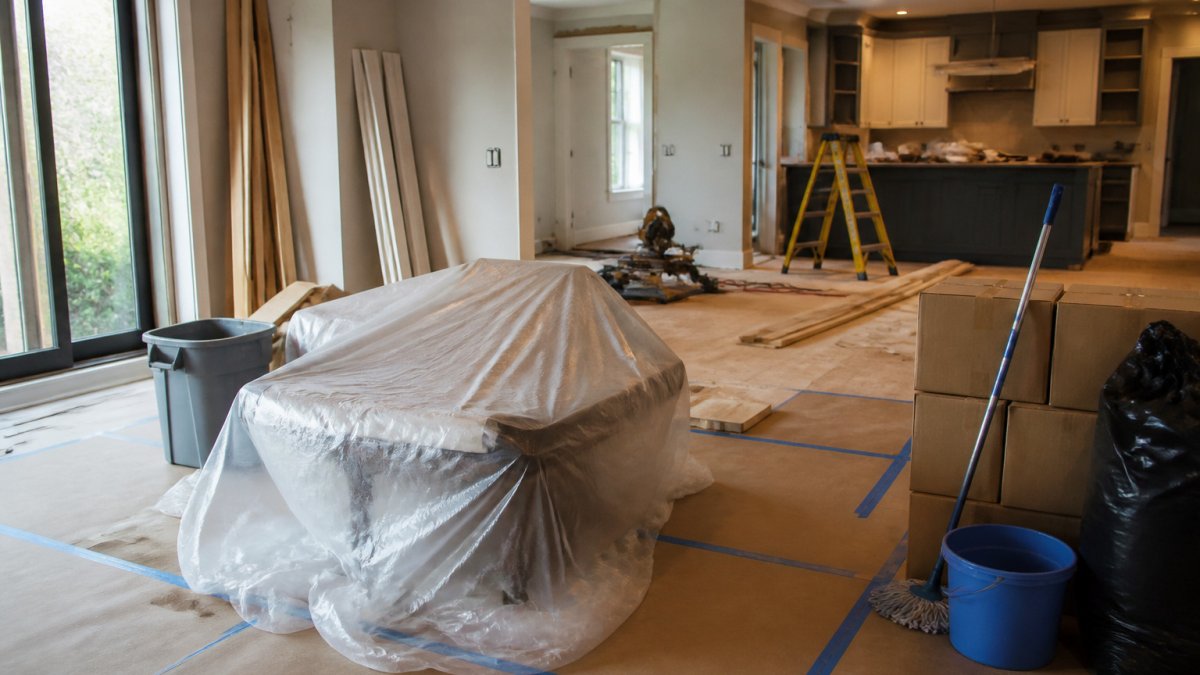
The first step in any home repair is drawing a physical boundary around the work.
Walk the area and ask three questions: What can fall, tip, or break here? What overhead hazards exist, like loose fixtures or low beams? Where will debris and dust travel?
Then set the zone. Use painter's tape on the floor, a baby gate in a doorway, or a simple verbal rule for the household.
A common mistake is treating the work zone as optional for a "quick" job. Quick jobs cause the most injuries because people skip prep.
Protect the People in the House: Kids, Older Adults, and Pets
Household safety during repairs means planning for the people who can't protect themselves. Children and pets move fast and don't understand warnings. Older adults may have trouble with balance or breathing dust.
Start with a simple plan:
- Assign one adult to watch children and pets during loud or dusty work
- Move pets to a closed room away from the work zone
- Clear a walking path for older adults so they don't detour through the work area
If you're planning a larger project, how to prepare for home renovation disruption covers the full plan for keeping the household safe and sane during the mess.
Your Home Repair Safety Checklist Before Any Project Begins
A home repair safety checklist is a short pre-flight routine you run before every project, big or small. It takes five minutes and catches the mistakes that cause most accidents.
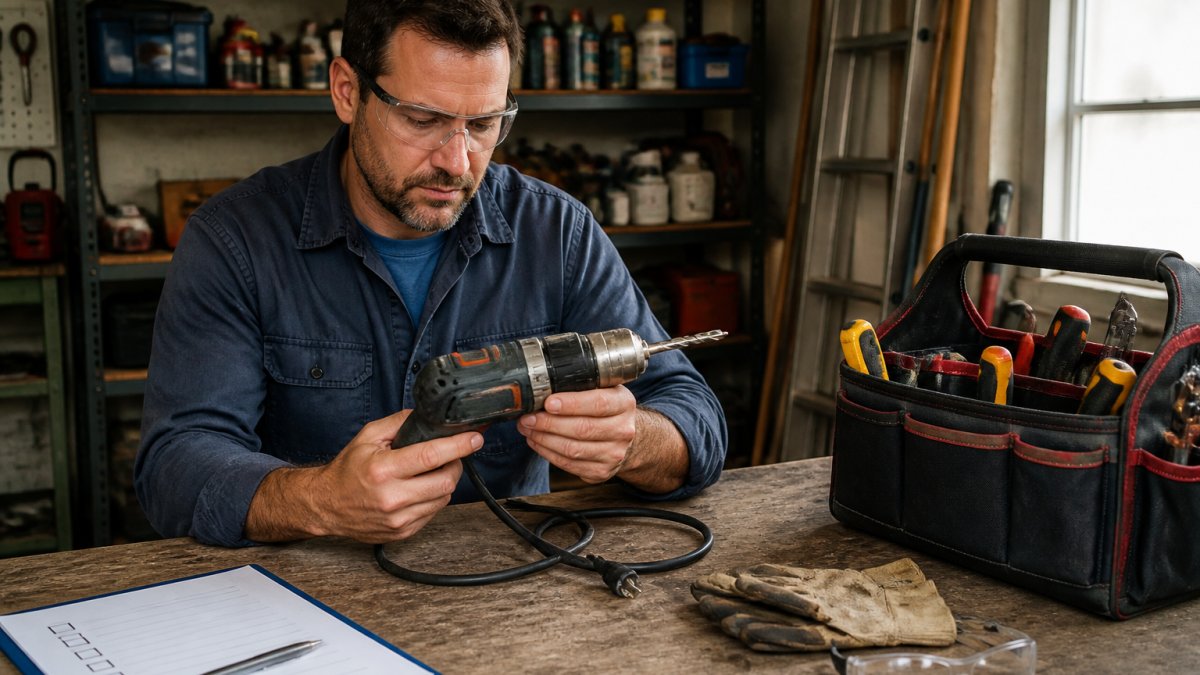
Here's the one we'd use:
| Check | What to Look For | Why It Matters |
|---|---|---|
| Tools | Frayed cords, cracked handles, missing guards | Faulty tools cause shocks and kickback |
| Power | Location of breaker, no water nearby | Prevents shock and electrocution |
| Ventilation | Open windows, fans ready | Reduces dust and fume exposure |
| Escape route | Clear path out of the work zone | Critical if something goes wrong |
| First aid kit | Stocked and within reach | Buys time after a cut or burn |
Run this list every time. The five minutes you spend is the cheapest insurance you'll ever buy.
Inspect Tools and Equipment Before Every Use
Equipment inspection separates safe homeowners from injured ones. Before you plug in or pick up any tool, look it over.
Check for:
- Frayed or cracked power cords
- Missing or damaged guards on saws and grinders
- Loose handles on hammers and pry bars
If a tool fails any check, stop. Replace the cord, fix the guard, or rent a working tool. Never tape a frayed cord and hope.
Check for Hidden Hazards in Older Homes
Older homes hide dangers newer ones don't. Before you cut, drill, or demo, assume the worst and check.
Watch for these common hazards:
- Asbestos in old insulation, floor tile, and pipe wrap
- Lead paint on windows, trim, and doors in pre-1978 homes
- Knob-and-tube wiring behind walls
The EPA's guide to lead-safe renovation explains the rules for homes built before 1978. If you suspect asbestos or lead, stop and call a pro. If a hidden problem surfaces mid-repair, here's how to handle hidden problems during repairs without letting costs spiral.
DIY Home Repair Safety Tips for the Tasks You Handle Yourself
Some jobs are safe to do yourself. Others aren't. Know which is which before you start.
Task-Specific PPE and Safe Tool Use
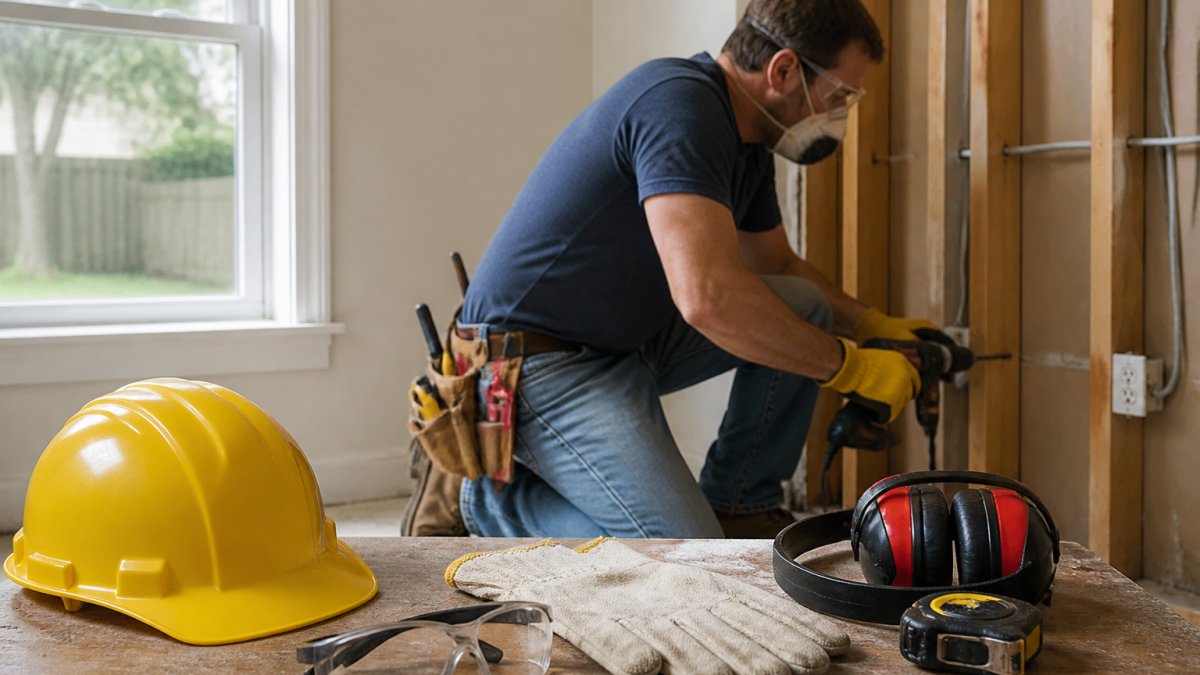
Personal protective equipment isn't one-size-fits-all. Match the gear to the job.
- Sanding or cutting: safety glasses and an N95 mask
- Painting or solvents: gloves and a respirator
- Loud power tools: ear protection
Safe tool use matters just as much. Keep blades sharp. Let the tool do the work. Never reach across a running blade. And never remove a guard to "get a better angle."
Electrical Safety and When to Stop
Electrical work is the one area where DIY goes wrong fast. The Electrical Safety Foundation guidance is blunt: water and electricity don't mix, and neither do amateurs and live wires.
Follow these rules:
- Turn off the breaker before touching any wiring
- Test the circuit with a voltage tester to confirm it's dead
- Never work on wiring with wet hands or on a wet floor
Stop and call a licensed electrician if you see burned wiring, a panel that's hot to the touch, or anything you don't fully understand. No repair is worth a shock.
How to Control Dust During Home Renovations
Dust control during renovations protects your lungs and your home. Fine dust from drywall, wood, and concrete gets everywhere and stays airborne for hours.
A few simple steps make a big difference:
- Seal doorways with plastic sheeting and tape
- Set up a box fan blowing out a window to create negative pressure
- Use a shop vac with a fine-particle filter, not a household vacuum
If the dust contains lead or asbestos, stop. Those materials require professional handling, and no fan or mask makes it safe to do yourself.
When to Hire a Professional for Home Repairs
Knowing when to hire a professional for home repairs is a safety skill, not a sign of defeat. Use the thresholds below to make the call before you start, not after something goes wrong.
Use a Three-Question Test
Ask these questions about any repair. A single "yes" is enough to stop and call a licensed trade professional.
- Does the work require a permit? Permits exist because the work carries life-safety risk. Structural changes, new or relocated circuits, gas piping, water heater replacement, and most plumbing alterations typically require one. If you are unsure, call your local building department and ask. The answer is free.
- Would a mistake injure someone or damage the structure? Gas leaks, carbon monoxide, electrical shock, roof falls, and load-bearing changes all fall here. So does anything that could flood the house or start a fire.
- Do you lack the tool, the training, or the confidence to do it correctly the first time? A repair you cannot verify is a repair you cannot trust. Confidence without competence is how people get hurt.
Stop-Work Criteria
Stop immediately and call a professional if you encounter any of the following mid-repair:
- Burned, melted, or scorched wiring, or a breaker panel that is hot to the touch
- The smell of gas, or a gas appliance that will not stay lit
- Suspected asbestos, lead paint, or mold disturbed during demo
These are not judgment calls. They are signals that the job has moved beyond DIY scope.
Permits, Codes, and Insurance
Permits and codes are not paperwork for its own sake. Work done without a required permit can complicate a future sale, and some insurers can decline or limit claims for unpermitted work that contributes to a loss. Before starting a project that touches structure, electrical, plumbing, or gas, confirm the local requirement and check with your insurer about coverage during the work.
Jobs That Belong to a Licensed Trade
Call a pro when the job involves:
- Gas lines or gas appliances
- Main electrical panels, new circuits, or any work inside the panel
- Roof work above one story
A furnace service or heating system check is another job for a pro. So is anything that touches your home's safety systems, including smoke and carbon monoxide alarms that are hardwired into the electrical system.
If you're weighing your options, our guides on common home repairs that require professional help and hiring a handyman vs a general contractor lay out the decision clearly.
Emergency Response and First Aid for Repair Mishaps
Even careful homeowners have accidents. Knowing what to do in the first minute matters more than anything else in this guide. Keep a stocked first aid kit in the work zone, know where the nearest hospital is, and learn the sequences below before you need them.
Electrical Incidents
If someone is in contact with a live circuit, do not touch them. Cut power at the breaker first, then call 911. If you cannot reach the breaker safely, use a dry, non-conductive object such as a wooden broom handle to separate the person from the source. Once clear, check breathing and start CPR if trained and needed.
Gas Leaks
If you smell gas or hear hissing near a gas appliance or line:
- Do not flip light switches, use phones, or start anything that could spark inside the home
- Leave the building and get everyone out
- From outside, call 911 and your gas utility's emergency line
A gas appliance that won't stay lit, a yellow rather than blue flame, or soot around a burner can indicate incomplete combustion and carbon monoxide risk. Ventilate, leave, and call for service.
Fires
For a small, contained fire such as a grease flare or a small electrical fire, use the right extinguisher: Class B or K for grease, Class C for electrical. Never throw water on a grease or electrical fire. If the fire is growing, producing heavy smoke, or blocking your exit, leave and call 911.
Cuts, Burns, and Eye Injuries
- Cuts: apply firm pressure with a clean cloth, elevate the wound, and call for help if bleeding will not stop after about ten minutes of pressure or if the wound is deep or gaping
- Burns: cool with running water for at least ten minutes, cover loosely, and seek care for burns larger than the palm of the hand, on the face or hands, or that look white or charred
- Eye injuries: flush with clean water for 15 minutes, remove contact lenses if present, and seek care. For a foreign object embedded in the eye, do not remove it; cover and get medical help
Falls and Head Injuries
Do not move someone with a possible neck or back injury unless they are in immediate danger. Call 911. For a head injury, watch for confusion, vomiting, unequal pupils, or loss of consciousness, and seek emergency care even if the person seems fine at first.
Before You Need It
- Post the local emergency number and the gas utility's emergency line near the work area
- Confirm smoke and carbon monoxide alarms are working before dusty or electrical work
- Know where the main electrical disconnect and the gas shutoff are, and how to operate them
For any serious injury, call 911. Don't drive yourself.
Request Your Free Quote and Plan Your Next Repair Safely
The safest repair is the one you plan before you start. If a job feels risky, or you simply want it done right, we can help.
Same day home repair quote: what to expect in 2026 walks you through our process from first call to finished job.
Get started with Reliable Repair ATL LLC and keep your home safe, comfortable, and well-maintained.
Frequently Asked Questions
What safety equipment should you use for home repairs?
Match the gear to the task. Safety glasses are the baseline for drilling, cutting, or hammering, and hearing protection matters when using saws or nail guns. Add a NIOSH-rated N95 respirator for sanding or demolition, work gloves for handling debris, and sturdy closed-toe boots. For electrical work, use insulated tools and a non-contact voltage tester. Keep a fire extinguisher within reach and a first aid kit in the work zone. Replace damaged PPE rather than reusing it.
How can you keep children and pets safe during renovations?
Set up a physical barrier, such as a zip-wall or baby gate, so kids and pets cannot enter the work zone. Schedule the loudest and dustiest tasks while they are out of the house, and store tools, screws, and chemicals in locked containers at the end of each day. Keep pets away from paint fumes and debris, and never leave a ladder or open floor cutout unattended. A short daily walkthrough before work starts catches hazards you missed.
When should you hire a professional instead of doing a repair yourself?
Call a licensed professional for anything involving the electrical panel, gas lines, structural framing, roof work above one story, or permits. The same applies if you find asbestos, lead paint, or mold in an older home, or if a repair keeps failing. A good rule: if you cannot explain the full scope and the safety steps out loud, hire it out. Reliable Repair ATL LLC handles same-day repairs and monthly maintenance plans.
What should you do if you find a safety hazard during a home repair?
Stop work and secure the area first. Shut off power or gas at the source if it is safe to do so, then clear people out of the space. Do not cover up or paint over suspected asbestos, lead paint, or mold; those require testing and licensed abatement. Photograph the hazard, note its location, and call a licensed professional for an assessment. If the hazard is urgent, such as a gas smell or sparking outlet, leave the home and call 911 or your utility's emergency line.