 comparison
Is Monthly Home Maintenance Worth It in 2026
Table of Contents
- The Real Cost of Skipping Monthly Home Maintenance
- How Much Does Monthly Home Maintenance Cost
- Home Maintenance Plan Benefits vs. Pay-as-You-Go Repairs
- Monthly Home Maintenance Checklist and Prevention Strategy
- Creating Your Home Repair Budget: The 1-2% Rule
- When Monthly Maintenance Plans Actually Pay for Themselves
- Conclusion: Making the Decision for Your Home
- Frequently Asked Questions
Last Updated: October 17, 2026
The Real Cost of Skipping Monthly Home Maintenance
Most homeowners ignore their roof until it leaks and their HVAC until it fails in July, letting small problems become catastrophic.

The question isn't whether you can afford maintenance, but whether you can afford to skip it.
The real cost goes beyond dollars: neglected homes depreciate faster, attract fewer buyers, cost more to insure, and systems that could last 20 years fail at 12.
How Much Does Monthly Home Maintenance Cost
Monthly home maintenance costs depend on your home's age, size, and condition: a new home costs less than an older property with deferred repairs.
The industry uses a practical rule: the 1-2% rule. Set aside 1-2% of your home's purchase price annually for maintenance and repairs.
That covers a lot. Monthly home maintenance includes:
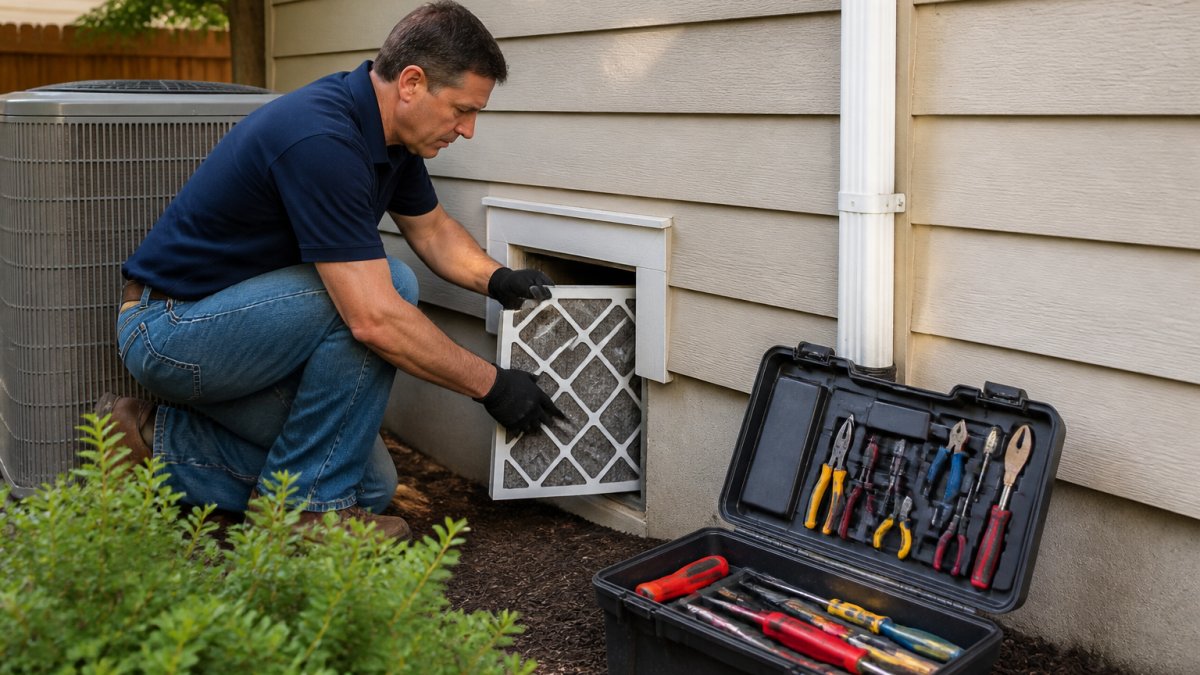
- HVAC filter changes and annual inspections
- Gutter cleaning and downspout maintenance
- Plumbing inspections and minor repairs
Some months you'll spend nothing, others more; the key is a budget that smooths the peaks and valleys.
What a Monthly Maintenance Plan Actually Costs
A preventive maintenance membership is typically a flat monthly or annual fee for scheduled visits, priority scheduling, and a discount on uncovered repairs. Pricing varies by market, home size, and systems covered, but a common structure looks like this:
- A base plan covering HVAC, plumbing, and electrical inspections: often in the low-to-mid hundreds of dollars per month for a single-family home
- Add-on coverage for roof, gutters, pool, or irrigation: additional monthly cost per system
- A per-visit or service-call fee that applies even when the visit is included in the plan
Read the contract carefully: service-call fees, exclusions, annual caps, and cancellation penalties all change the effective price. A plan that looks cheap per month can cost more than self-managed savings once you add call fees and the work it refuses to cover.
What Self-Managed Savings Actually Costs
Self-managed savings means setting aside the same monthly amount in a dedicated account and paying for inspections, tune-ups, and repairs as they come. The money is yours and earns interest, but you must schedule the work, vet contractors, and absorb repairs without a discount.
A realistic self-managed budget for a mid-age single-family home often looks like this:
- HVAC tune-up twice a year: a few hundred dollars total
- Gutter cleaning twice a year: a few hundred dollars total
- Plumbing and electrical inspections: a few hundred dollars when performed
The annual total often lands inside the same 1-2% band. The difference is timing, control, and who carries the risk of an expensive surprise.
The Comparison That Actually Matters
The honest comparison is not "plan versus nothing." It is "plan versus the same dollars saved and spent on demand." Put the two side by side on the same home:
| Cost Element | Monthly Plan | Self-Managed Savings |
|---|---|---|
| Fixed monthly outlay | Yes, every month | No, you choose the amount |
| Scheduled inspections | Included | You schedule and pay per visit |
| Repair discount | Typically 10-15% | None, full price |
| Service-call fees | Often applies per visit | None |
| Money if unused | Kept by the provider | Stays in your account |
| Coverage caps and exclusions | Common | None |
| Effort required | Low | Moderate to high |
Neither column wins universally. A homeowner who travels, owns an older home with many systems, and would otherwise defer maintenance often comes out ahead on a plan because it forces the work to happen. An organized homeowner with a newer home and a healthy reserve often comes out ahead self-managing.
Professional monthly maintenance plans handle many of these tasks for you, with predictable costs, regular inspections, and priority scheduling when something breaks. Compare that all-in price against your own savings discipline, not against the fantasy of spending nothing.
Home Maintenance Plan Benefits vs. Pay-as-You-Go Repairs
The choice between a monthly home maintenance plan and pay-as-you-go repairs is about predictability versus flexibility.
A monthly maintenance plan costs money upfront whether you use it or not, but you get regular inspections, preventive work, and priority access to repair professionals.
Most homeowners get it wrong by comparing a maintenance plan against the cost of nothing. Systems age, weather happens, and wear and tear is inevitable.
A maintenance plan typically includes:
- Scheduled inspections of major systems
- Priority response times for emergency repairs
- Discounted rates on additional work
- Documentation of maintenance history
Monthly Home Maintenance Checklist and Prevention Strategy
A monthly home maintenance checklist ensures nothing gets overlooked. This isn't about becoming an expert, it's about simple checks that catch problems early.
A practical monthly home maintenance checklist includes:
Inside Your Home:
- Check for water stains on ceilings and walls
- Inspect under sinks for leaks
- Test GFCI outlets in bathrooms and kitchen
- Check appliance seals and connections
Outside Your Home:
- Clear gutters and downspouts
- Check roof for missing shingles or debris
- Inspect foundation for cracks
- Test exterior faucets and hose connections
The goal isn't perfection but catching small issues before they become expensive: a missing gutter guard costs nothing to replace, while a gutter clogged for two years costs thousands in foundation damage.
Prevention is always cheaper than repair: a sealed foundation crack prevents water intrusion, a cleaned gutter prevents roof damage, and a tested outlet prevents fire risk.
Creating Your Home Repair Budget: The 1-2% Rule
Here's how to apply it: Take your home's purchase price or current market value. Multiply by 1-2%.
A $400,000 home at the 1.5% midpoint requires $6,000 annually, or $500 monthly.
This budget covers routine maintenance, seasonal upkeep, and a reserve for unexpected repairs.
The 1-2% rule adjusts based on your home's age:
- New homes (0-5 years): Start at 1%
- Mid-age homes (5-15 years): Use 1.5%
- Older homes (15+ years): Plan for 2% or higher
Older homes have older systems that fail more often, and the 1-2% rule accounts for that reality.
When Monthly Maintenance Plans Actually Pay for Themselves
A monthly maintenance plan pays for itself when the work it covers and the problems it catches cost more than the plan's all-in price over the same period. Most homeowners run the math wrong because they compare the monthly fee against a single repair and ignore the fees, caps, and exclusions that decide the real break-even point.
The Break-Even Formula
Break-even is a range that depends on four inputs:
- The plan's all-in annual cost, including the monthly fee plus any per-visit service-call fees you expect to trigger
- The work the plan actually covers, net of exclusions and annual caps
- The market price of that same work if you paid a contractor directly
- The probability that the covered work prevents a larger repair within the coverage period
A plan with a low monthly fee but a high service-call fee and a low annual cap can cost more than self-managed savings even when it catches a problem. A plan with a higher fee but generous coverage and no call fees can pay back on a single tune-up and inspection cycle.
A Realistic Scenario, With the Fine Print
Consider a mid-age single-family home with a 12-year-old HVAC system and an 18-year-old roof.
The self-managed side. The homeowner saves the same monthly amount and pays a contractor for the same two HVAC visits and two plumbing inspections.
The break-even turns on two questions. First, does the plan's discount plus the value of included inspections exceed the call fees and the float the homeowner gives up?
When the Plan Clearly Wins
A plan tends to pay for itself when several of these are true:
- The home is older and has multiple systems that benefit from scheduled inspection
- The homeowner would otherwise defer maintenance or forget to schedule it
- The plan has low or no service-call fees and a high annual cap
- The plan's repair discount applies to the systems most likely to fail
When Self-Managed Savings Clearly Wins
Self-managed savings tends to win when:
- The home is newer and under warranty, so major systems are already covered
- The homeowner is organized and will actually schedule and pay for the work
- The plan's exclusions and caps are so tight that the covered work is narrow
- The service-call fees are high enough that using the plan costs more than hiring directly
The Contract Terms That Change the Math
Before you sign, read for these terms, because each one moves the break-even point:
- Cancellation terms. Some plans require a minimum term or charge a penalty to cancel. A plan you cannot leave is a plan you cannot re-evaluate.
- Service-call fees. A per-visit fee that applies even to included visits can erase the value of a low monthly price.
- Annual limits and caps. A cap on covered work means the plan stops paying after a threshold, which matters most in the year you need it.
- Exclusions. Pre-existing conditions, code upgrades, and certain systems are commonly excluded. Confirm what is not covered before you assume it is.
A Simple Way to Decide
Run the numbers for your own home in three steps. First, total the plan's all-in annual cost, including the call fees you expect to use. Second, price the same inspections and tune-ups at market rates if you paid directly.
The real question is not whether a maintenance plan pays for itself in theory. It is whether it pays for itself on your home, with your systems, under that specific contract.
Conclusion: Making the Decision for Your Home
Is monthly home maintenance worth it? The answer depends on whether you want to control your home's destiny or let your home control your finances.
A home that receives regular maintenance holds its value, stays safer, and costs less to own. A neglected home depreciates, develops serious problems, and becomes expensive to fix.
At Reliable Repair ATL LLC, we help homeowners make this decision by offering convenient monthly maintenance plans and same-day service options to provide prompt, high-quality solutions tailored to your needs.
If you're ready to stop betting against your home and start protecting it, get your free quote today.
According to the National Association of Home Builders' home maintenance guidelines, homeowners who follow preventive maintenance schedules experience 30% fewer emergency repairs than those who don't. The U.S. Department of Housing and Urban Development's homeowner maintenance recommendations emphasize that regular upkeep is the most cost-effective way to protect your investment.
Frequently Asked Questions
How much should I budget monthly for home maintenance?
Most homeowners should budget 1-2% of their home's value annually for routine maintenance and repairs. For a $300,000 home, that's $3,000 to $6,000 per year, or $250 to $500 monthly. This covers preventive upkeep, minor repairs, and helps build a reserve for unexpected issues. Your actual monthly home maintenance cost depends on your home's age, size, and system condition. Older homes typically require higher budgets due to increased wear and tear on major systems like HVAC, plumbing, and electrical.
What are the main benefits of a monthly home maintenance plan?
Home maintenance plan benefits include catching small problems before they become expensive repairs, extending the lifespan of major systems and appliances, maintaining your property value, and providing peace of mind through predictable costs. Regular inspections identify issues like roof leaks, HVAC inefficiency, or plumbing problems early. This preventive approach typically costs far less than emergency repairs. Plans also often include priority service and discounts on parts, which adds real financial value over time.
Is it cheaper to pay for repairs as they happen or use a monthly maintenance plan?
Whether it's cheaper to pay for repairs as they happen or use a monthly maintenance plan depends on your home's age, condition, and your personal discipline. Monthly maintenance plans can help catch issues early, potentially saving money on larger, emergency repairs. However, if your home is newer and in excellent condition, pay-as-you-go may work. The value of a plan often becomes more apparent for homeowners with older homes or multiple systems needing regular attention.
What should a monthly home maintenance checklist include?
A comprehensive monthly home maintenance checklist covers HVAC filter changes, gutter cleaning, plumbing inspections for leaks, checking caulk around tubs and showers, testing smoke detectors, inspecting visible roof areas, checking basement or crawl space for moisture, and examining grout and caulk. Seasonal tasks include winterizing pipes, cleaning condensers, and checking weatherstripping. This routine upkeep prevents costly repairs and extends the lifespan of your home's critical systems.